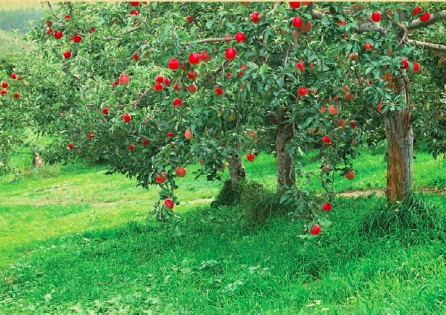
Производители яблок штата Мичиган применяют прогрессивные методы в бизнесе и технологиях

ПРЕСС-РЕЛИЗ

Производителям яблок штата Мичиган требуются не только хорошая погода и Великие Озера для того, чтобы отправлять на рынок великолепные яблоки, и ежегодно приносить 700-900 миллионов долларов экономике штата. Прогрессивная технология производства и качественный маркетинг—это также очень важные составляющие яблочной индустрии Мичигана.

«В этом году ожидается, что урожай яблок превысит 26 миллионов бушелей, это на 40 процентов больше среднего, и примерно в 2 раза больше урожая 2010 года», – говорит Дениз Донохью, исполнительный директор Комитета Яблок Мичигана. “Такой большой урожай получился благодаря сочетанию благоприятных факторов, в том числе благодаря великолепным условиям, которые были в мае, когда были огромные «королевские цветки», отсутствию морозов во время и после цветения, дождю только тогда, когда было необходимо, и более прохладным ночам августа”.

Отвечая предпочтениям потребителей, в течение последних 5—10 лет некоторые производители совершенствовали свое мастерство в производстве яблок, отводя все больше места в саду лучшим сортам яблок, таким как Фуджи, Ханикрисп, Джонаголд, Брэбурн и Гала. Высокая плотность посадки деревьев – до 500 деревьев на акр – позволяет получить для продажи больше высококачественных яблок. Подпорки и искусственное орошение также способствуют улучшению урожая, хотя примерно 70 процентов яблок Мичигана зависит от естественных осадков. Для увеличения урожая некоторые производители также используют технологию, которая смягчает холодную погоду, способную нанести вред нежным плодам. Ветряные машины, похожие на гигантские ветряные турбины, направляют ночью на яблони более теплый воздух, чтобы снизить влияние холодов.

Объем прошлогоднего урожая был меньше среднего, что дало возможность партнерам по отрасли заняться заменой оборудования. Перевозчики вложились в новое оборудование для хранения и упаковки, а также модернизировали старое упаковочное оборудование. Высокотехнологичные камеры и сенсорные датчики снимают несколько изображений в секунду с каждого яблока на высокотехнологичной упаковочной линии, отбирая яблоки должного цвета и без повреждений. Все это в сочетании с контролем человека благоприятно сказалось на качестве свежего продукта.

На рынке в 2011 году партнерство MAC и Pure Michigan существенно увеличит долю представленных мичиганских яблок. Даже за пределами Мичигана покупатели узнают логотип Pure Michigan, что доказывает эффективность действий Комитета по туризму и путешествиям. В этом году штат вложил 10 миллионов долларов в эту программу.

Внедряя технологии в область маркетинга, индустрия Яблоки Мичигана aдaптировала QR-коды для своих рекламных объявлений и плакатов и имеет новое приложение «смартфон». Программные приложения для iPhone® и iPad® сообщают пользователям о местонахождении ближайших сельскохозяйственных рынков, информируя о доступных товарах и времени работы. Только в Мичигане приложение «Michigan Farm Markets» доступно бесплатно в магазинах Apple.

MAC также присутствует на Фэйсбуке в “Яблоках Мичигана,” на канале «Яблоки Мичигана» в You Tube, и обновляет ситуацию по урожаю в Твиттере.

Комитет Яблок Мичигана—это некоммерческая сельскохозяйственная организация, занимающаяся продвижением, образованием и исследованиями, в целях популяризации Яблок Мичигана и увеличения их потребления как в Мичигане, так и во всем мире. Более подробную информацию вы найдете на MichiganApples.com.

Alexey Kudrin doesn’t believe in the fall of the Russian rouble

The favourable opinion of the Finance Minister of Russian Federation Alexey Kudrin regarding the economic perspectives of Russia has differed from the negative forecast of the Ministry of Economic Development and Trade, according to which the turns for the better in Russian Federation would start not earlier than in the year 2014, and the rouble would depreciate.

Alexey Kudrin has made a forecast that Russia would be able to “reduce to nothing” the budget balance already in the financial year 2011 … “We’ll have finished the specification of the forecast by the end of this week, but it seems that we are coming to the balanced zero budget”—the minister says.

Alexey Kudrin links the revision of the expectations with the dynamics of the oil prices. In particular the barrel of the oil Urals in the year 2011, according to his words, will cost not $105 (as the Ministry of Economic Development and Trade had forecasted), but it will be 3 dollars more expensive”. The minister has made his declaration after “Rosneft” had completed an agreement with the American petroleum company ExxonMobil , and the international rating agency “Standard & Poor’s” had confirmed the ratings of Russia in reference to the obligations in international and national currency and had given a stable forecast about them.

Source: www.dp.ru

Crisis in Russian market for imported fruits

According to Fruit-Inform Project, sales of imported fruits are rather difficult in Russia in the current season. As of today, wholesale prices for bananas and citrus fruits are on average 2 times lower than a year before that, nevertheless, enables sales to increase only slightly.

Partially such a situation is observed due to importers’ overestimates of sales volumes in summer, as they were based on volumes of last year and the first half of 2011 when prices were high and demand was traditionally exceeding all expectations. However, the demand for imported citrus fruits, bananas and exotics sharply fell in July this year when the supply of cheap domestic vegetables started rapidly growing in the Russian market and early August when the market began to be supplied with local melons, watermelons and fruit.

Source: www.dp.ru

X5 to open more than 500 stores in 2011

X5 Retail Group N.V., one of Russia’s largest retailers is planning to open about 540 new stores in 2011. Within the development strategy the company will focus on towns with more than 10,000 people. The majority of new stores will be opened organically, but the development package will also include acquisition deals. X5 is interested in all the chains operating in the focus regions and they keep in touch regarding potential takeovers.

Source: www.retail.ru

Russia is becoming the world leader in citrus import

According to a USDA (Foreign Agricultural Service by the Department of Agriculture of US) study, citrus is the second most popular fruit in Russia, following the apple.

From 2000 when 471,861 metric tons (MT) of citrus got into the country the import rose to 1,480,695 MT in 2010, a year when the market value for citrus in Russia was around 1.2 billions.

On the other hand, statistic data from the Statistic Committee of the Russian Federation indicates that, in 2010, the consumption per capita of citrus was of 7.3kg, meaning some 20% more than in 2008.

“The market is far from saturated, it has a very good potential for expansion”, concludes the report. Main citrus suppliers of the Russian market are Turkey, Egypt, Morocco, South Africa and China.

Source: www.freshplaza.com

Russia increases fruit and vegetable imports from CIS

Last year Russia imported 200,000 tones of fresh fruits, vegetables and dried fruits from Uzbekistan worth about $300 mln. Uzbekistan’s fruit and vegetables export volume to Russia exceeded export volumes of such traditional suppliers of the Russian Federation as Poland, China, Spain, Argentina, Morocco, South Africa and Italy. Ukraine is strengthening its positions in the Russian market for fruits and vegetables too.

Ukraine has already outstripped Spain, Egypt, Belgium, France and Germany in export value of vegetables to the Russian Federation. Russia is also increasing imports of Ukrainian apples. “In the season 2010/11 Ukraine entered the group of top-four biggest suppliers of apples to Russia and outstripped its major European competitors such as the Netherlands, Italy, Germany, France, Serbia, Belgium and Hungary”, Tetiana Getman, Head of Fruit-Inform Project, said during the First International Conference “Apple Business of Ukraine, Russia and Moldova – 2011”.
Azerbaijan’s Ministry of Agriculture also expect the country’s exports of fruits and vegetables to Russia to grow by 20-25%.

Source: www.freshplaza.com

Sedmoy Kontinent reported sales growth in HY1 2011

Grocery chain Sedmoy Kontinent (Seventh Continent) has reported strong growth in profit and sales for the first half of the year, helped by continued expansion.
For the January-June period, net profit more than tripled to 2.03 bn roubles (€48.5m), from 668.9 m roubles last year, while revenue jumped up 23.4% to 24.19bn roubles (€578m).

The company attributed the growth in sales to the addition of new outlets as well as “the improving welfare of the country’s population, and the Moscow administration’s policy for developing civilized food trade instead of product markets”. Profits were helped by lower commodity costs and a better pricing policy, as well as savings on labour expenses.

Source: www.freshplaza.com

Tax lifted for horticultural produce from the EU to Russia

The measure, which was adopted on June 22nd by the Russian Federation, was imposed to prevent the entry of the bacteria into Russia. With the elimination of this measure, which came into force on August 9th, the EU exports of fresh horticultural produce to Russia are exempt from the obligation to submit a certificate of absence of E. coli.

The current situation for exports is the same as before the outbreaks of E. coli, based on compliance with the memorandum signed between the European Commission and the Russian Federation in February 2008, which requires from each shipment exported a “document of use of plant protection products” and in the case of citrus, nectarines, peaches and pears, a “security certificate”, showing the result of the analysis.

Source: www.freshplaza.com

Russian fast-food market is growing by 25-30% annually.

The volume of the fast-food market occupies a relatively modest part of the total public catering turnover. Despite this fact its share is constantly growing. In 2010 the fast-food market almost reached 100 bn roubles and it accounted for 12.8% of the public catering market.

As per new marketing research “Russian public catering market. The current situation and forecast”, carried out by Intesco Research Group, the share of the Moscow fast-food market in 2010 amounted to 40% of the whole Russian market, which is much higher than Moscow’s share in the total public catering turnover. The fast-food market in Moscow with dozens of new chains is very dynamic and adds 25-30% annually.

Source: www.retail.ru

Situation on the Russian fruit market

The full report Prognosfruit 2011 was presented in Slovenia, which details the projected harvest of non-EU countries in the northern hemisphere. Russia projects an apple harvest around 1.9 mln tons, reflecting a growth of 4% compared with last season. In absolute terms this growth translates into about 80,000 additional tons in the market.

Russia annually imports an average of 1.3 mln tons of apples, mainly from Europe (EU 15).The southern hemisphere supplies Moscow and St. Petersburg with more than 100,000 tons per year, a volume that varies with existing domestic crops.
Pear production is estimated at 50,000 tons, a decline of 9% over the 2010 season.

Last year Moldova exported nearly 180,000 tons of apples to Russia and hopes that this volume is maintained this season, despite the projected decline in production.

Ukraine is also becoming one of the largest suppliers to Russia and it is expected to export about 150,000 tons of apples this year, taking into account that the harvest will increase by 15% and exceed for the first time one million tons.

The good quality that is expected for the Polish apple harvest also anticipates a possible increase in the share of trade in fresh apples and this would also open the door to increased exports to Russia.

Source: www.freshplaza.com